Why Surface Cleaning Never Removes Vomit Odour

A flat off Kilburn High Road, three cleans in eighteen months, two of them mine. The first was a proper job on a bedroom carpet after a stomach bug, and the carpet came up clean – no mark, no smell, nothing at the handover. The tenant rang in July. Warm week, windows shut all day, and the room smelled the way the room had smelled originally. I went back, cleaned it again, same result, same phone call the following August.

The third visit I lifted the carpet at the skirting and put my hand on the underlay. It was still down there. It had been down there the whole time, and everything I had done in that room had been performed a centimetre and a half above the actual problem.

What is in vomit, and which part of it smells?

Very little of the smell comes from the food.

Stomach contents arrive at a pH of somewhere between 1.5 and 3.5 – hydrochloric acid, pepsin, partly broken-down protein, fats and starches, sometimes bile if the episode went on. The acid does its own damage, and on a nylon carpet it will shift dye and leave a colour change that survives every odour treatment you can name. That is a separate fault and worth mentioning to whoever cleans it.

The odour itself is mostly short-chain fatty acids. Butyric acid is the dominant one, which is the same compound that gives Parmesan and old sick their shared character, and the human nose detects it at concentrations measured in parts per billion. Isovaleric and propionic acid sit alongside it. Then there are amines from protein breakdown, and sulphur compounds – hydrogen sulphide, methanethiol – which are detectable at even lower thresholds than the acids.

The practical consequence is that you can remove 99 per cent of the material and still have a room that smells. The nose is calibrated to the last one per cent, and that one per cent is still down there.

Why it gets worse over three weeks

Vomit is a bacterial culture medium with a bacterial population already in it. Once the acid is diluted by whatever you flushed it with, the pH climbs into a range those organisms like, and they carry on working on the protein and fat left in the fibre and the backing. Fermentation produces more butyric acid, not less.

So a spot that smelled unpleasant on the night can smell worse a fortnight later, which people find hard to believe and read as their own imagination. It is not imagination. The odour source is being manufactured on site.

Why doesn’t surface cleaning reach it?

Because of what happened in the first ninety seconds, before anyone got there with a cloth.

Vomit is largely liquid, and liquid in a carpet travels down. It passes the face fibre in a couple of seconds, wets the primary backing, soaks the latex layer, and goes into the underlay – and if the volume was significant, it goes through the underlay and onto the floor beneath. On a Woolwich job last year I lifted a fitted carpet and found the outline of the spill printed on the floorboards, perfectly legible, a full year after the event and two cleanings later.

Every cleaning method that works from the top faces the same physical limit. A wand at the surface pulls with real force, but that force falls away very quickly with depth, and it is pulling through a latex barrier layer specifically designed to resist the passage of liquid. You get the pile clean. You get some of the primary backing clean. Below the latex you are achieving close to nothing, and the fatty acids and the bacteria producing them are principally below the latex.

Then there is the geometry nobody thinks about. Liquid spreads sideways as it descends, so the contaminated area underneath is always larger than the mark on top – reckon on half as wide again, sometimes double. Cleaning the visible spot, even brilliantly, leaves a ring of untouched contamination around it that is doing all the smelling.

The twenty per cent you can see

What sits on the surface is the solids, and the solids are the least of it by odour weight. People spend an hour on the solids because that is the horrible part, and the horrible part is the easy part.

Get the bulk off with a spatula or a plastic scraper, working from the outside inwards, without pressure – pressing solids into the pile grinds them into the yarn twist and gives you a second problem. A metal dough scraper from a kitchen shop is the best tool for it. Then get white towel down and stand on it, because bodyweight through a towel pulls more liquid out of a carpet in ten seconds than a domestic wet vac will manage in five minutes. That is the highest-value thing an ordinary person can do, and almost nobody does it.

After that, whatever you spray on the top is competing with a problem it cannot reach. Deodorising sprays and fragranced foams do worse than nothing – fragrance sits alongside odour rather than cancelling it, and what you end up with is butyric acid and mandarin, which is a smell that belongs in no house in Greater London.

Why does it always come back in warm weather?

Two mechanisms, both moisture-driven.

Odour compounds have to be airborne for you to smell them, and volatility rises sharply with temperature. A residue that is sitting quietly in a backing at 14 degrees in February becomes actively volatile at 24 degrees in a closed south-facing bedroom in Streatham. Same quantity of residue, several times the release rate.

The second is bacterial. Dormant organisms in a dried residue rehydrate when humidity climbs and resume producing exactly what they were producing before. This is why the smell comes back after a rainy spell as reliably as after a hot one, and why a room shut up for a fortnight smells worse on the owners’ return than it did when they left.

The summer phone call

Every contractor I know gets a run of these in the first properly warm week of the year, and a fair share are jobs somebody else cleaned in November and signed off as finished. The clean was fine. The diagnosis was wrong. It is still down there, and the weather has done nothing more than turn the volume up on something that was never removed.

What does removing it properly involve?

You have to get the treatment to where the contamination is, and there are two ways: inject through the carpet, or lift it.

Sub-surface injection uses a needle or a flood tool to put treatment through the face into the backing and underlay, then a heavy extraction from the top, repeated. It works on smaller contaminations and it uses a lot of solution – three or four litres for something the size of a dinner plate is normal. Anyone treating a vomit odour with half a litre of anything is treating the appearance of it.

Lifting is better and I do it wherever the fitting allows. Fold the carpet back off the gripper, cut out and bin the contaminated underlay – underlay is £6 to £9 a square metre and cleaning it makes no sense at any price – treat the carpet backing directly from underneath, treat the floor, then reline and refit. A competent fitter will do the refit in twenty minutes.

Enzymes, and why they need time

Enzyme treatments are the right chemistry here: proteases for the protein, lipases for the fats, amylases for the starch. They are catalysts, and they work at a rate rather than instantly, so the thing that kills most enzyme treatments is impatience. They need moisture throughout the dwell – an enzyme in a dried carpet has stopped – warmth, and hours rather than minutes. Four to eight is realistic. Cover the treated area with plastic sheet to hold humidity, weight the edges, come back the next morning.

They also need the right pH range and get destroyed by high alkalinity, so an enzyme applied straight after a strong alkaline prespray is dead on arrival. And on wool, keep everything mild – wool tolerates a lot of acid and very little alkali, and a wool carpet that survives the vomit can still be ruined by the cure.

When is the carpet not worth saving?

When the contamination reached the floor and the floor is timber.

Floorboards absorb, and a Victorian pine board in an Enfield Town bedroom will hold odour indefinitely because you cannot extract from wood. The treatment there is to clean, dry properly, then seal the affected boards with a shellac-based primer, which locks the residue in. That is a decorating job and it is unavoidable if the smell is going to end.

Concrete is easier in one respect and worse in another – it does not soak in as deeply, but a screed with a crack takes the liquid down the crack and out of reach.

The honest arithmetic

A large episode on a mid-range carpet in an Ilford flat, contaminating two square metres with underlay and boards involved, will cost more in labour, materials and repeat visits than the carpet is worth. Say so at the quote stage. I would rather lose the job than take three payments to fail three times, which is what the Kilburn flat became before I lifted the thing.

Small and fresh is the opposite case. If a child was sick on a synthetic carpet over a foam underlay last night and you dealt with it in the first minute, cut a square out of the underlay, put an offcut back, treat the backing with an enzyme and give it a day. Total cost about eight pounds.

Which leads me to the practice I would happily see the back of: the ozone generator, left running in a sealed room for four hours to “kill” an odour. Ozone is a lung irritant, it degrades rubber and elastics throughout the room, and it does nothing whatever to the fatty acid residue in your underlay. It masks by damaging your ability to smell it for a while. Plenty of London operators still own one.

The Kilburn carpet came out and went in a skip. The boards took two coats.…
Optical Brighteners in Carpet Detergents: The Yellowing Risk Nobody Warns You About

There is a cream wool twist in a first-floor front room on Fortis Green Road in Muswell Hill that has a stripe across it. The stripe runs at an angle, about eighty centimetres wide, and it stops dead at the shadow line thrown by the bay. The carpet inside the stripe is a warm buttery yellow. Outside it, the same carpet is the colour it was in 2019.

The owner assumed sun bleaching and rang me to ask whether cleaning would even it out. It would not, and the sun was only half the culprit. The other half arrived in a bottle three years ago, applied by somebody who did a perfectly competent job and left the room with the carpet looking better than it had in a decade.

What is an optical brightener doing to a carpet?

Nothing chemical to the soil. That is the first thing to understand about the entire category.

An optical brightening agent – a fluorescent whitening agent, if you read technical sheets – is a compound that absorbs ultraviolet light in the region of 340 to 370 nanometres, which the human eye cannot see, and re-emits it as visible blue light at around 420 to 440 nanometres, which the eye sees very well indeed. Most of the ones in cleaning products are stilbene derivatives: diaminostilbene disulphonates, distyrylbiphenyls, the Tinopal family and their relations.

Fabrics and fibres yellow as they age. Yellow is the visual opposite of blue. Add blue light to a yellowing surface and the two cancel out, so the surface reads as neutral, and because the brightener is emitting light rather than reflecting it, the total light coming off the carpet can exceed what fell on it. That is the reason a brightened carpet looks not merely clean but faintly luminous. Blue over yellow.

The deposit is the whole of the effect

None of this removes anything. The soil that made the carpet look tired is still in the pile, minus whatever the detergent alongside the brightener lifted, and the brightener is a deposit sitting on the fibre to correct the appearance of what remains.

I have no objection to the effect in laundry, where the garment goes back in the machine next week and the deposit is refreshed and redistributed constantly. A carpet is washed every eighteen months if it is lucky, gets uneven light, and stays where it is put. Whatever you leave on it in March is still exactly there in October, on exactly the same tufts.

Where do brighteners come from if you never bought any?

The largest single source in London homes is washing powder poured into a hired carpet machine. People do it constantly – the machine wants a detergent, there is a box of biological powder under the sink, and consumer laundry detergent is heavily loaded with brighteners because that is a selling feature on clothes.

They also turn up in supermarket carpet shampoos, in a good number of aerosol spot cleaners, in some upholstery foams, and in the cheaper end of the trade prespray market. Ask a supplier directly and most will tell you straight. The ones who go quiet are answering the question.

The hire-machine problem, in more detail

A hire unit leaves a high proportion of what you put down in the carpet, which I have written about elsewhere in the context of moisture. The same applies to everything dissolved in that moisture. Brightener that would have rinsed away in a washing machine has no rinse cycle here – it dries into the pile and bonds to the fibre surface, and stilbene brighteners have real substantivity for cellulosics and reasonable affinity for nylon and wool.

Worse: application is by hand, in overlapping passes, at inconsistent dwell. So the deposit is uneven from the first day. You will not see that unevenness for a year or more, because a fresh deposit is doing its job everywhere it landed. The pattern of your passes is written into the carpet in a chemical that is currently invisible, waiting for daylight to develop it.

Why does the carpet go yellow a year later?

Stilbenes are not stable under prolonged ultraviolet exposure. They are conjugated organic molecules with a double bond that ultraviolet light is very good at attacking – the trans form isomerises to the cis form, which does not fluoresce usefully, and then the molecule oxidises further into breakdown products that are themselves yellow.

So the compound put down to cancel yellow becomes yellow. Blue over yellow, until the blue stops and the sum is yellow twice over: what was there originally, plus the residue of what was masking it.

This takes between about eight months and three years in a British interior, depending almost entirely on how much direct sun the area receives. A north-facing back bedroom in Stratford may never get there. A south-facing bay in a Victorian front room, with modern glazing that passes more UVA than the old glass did, will get there inside a year.

And the degradation is only in the sunlit part. That is what produces the stripe on Fortis Green Road, and it is why these faults look so much like sun damage that nobody investigates further. Sun damage to the carpet dye would fade the colour towards pale. This does the reverse – it drives the colour warm and dirty, most visibly on cream, ivory, oatmeal and pale grey, which is most of what gets specified in London sitting rooms.

There is a second version of the fault that has nothing to do with windows. Uneven deposit across the whole floor degrades at different rates according to loading, so a carpet cleaned with a brightener-heavy product develops a soft mottled appearance over two or three years – blotchy in a way that reads as poor cleaning rather than as chemistry. Owners then have it cleaned again, usually with the same class of product, and the new deposit hides the old fault for six months before both come through together.

The bay-window line

Any hard shadow boundary that stays in the same place is where the fault will show first. Bay window returns, the edge of a rug, the line under a sofa that has not moved since the last clean, the dark strip behind a full-length curtain. I look for those boundaries before I look at anything else on a yellowing job, because a fault that respects a shadow line is not a soiling fault. Soil does not care where the light falls, and a stripe that stops at a shadow line was put there by something in a bottle.

A Chiswick job last year had a perfect rectangle of pale carpet where an ottoman had stood, surrounded by yellowed carpet, and the owner had convinced herself the ottoman had somehow bleached the floor. The ottoman had protected it.

Can you tell whether a carpet has been treated?

Yes, in about four seconds, and this is the one piece of practical kit I would put in every householder’s drawer.

Buy a 365-nanometre ultraviolet torch. Not the cheap 395nm ones sold for spotting pet stains, which flood everything with visible purple – a proper 365 with a filter costs perhaps £25. Close the curtains, switch it on, and sweep the floor.

What the torch shows you

Brightener deposit fluoresces a bright, cold, slightly electric blue-white that is nothing like the response of the fibre itself. Where somebody has worked in overlapping passes you will see the passes. Where somebody has spot-treated with a supermarket product you will see a bright patch with a hard edge, often three times the size of the original spill. On a cotton rug fringe treated with a whitening product, the fringe will light up like a filament while the rug body stays dull.

The same torch shows other things. Urine fluoresces a dull yellowish-green, quite different from the blue-white of brightener, and once you have seen the two side by side you will never confuse them. That is worth the £25 on its own.

Can brighteners be taken back out?

Partly, sometimes, at a cost – and here is where I talk myself out of work.

Fresh deposit rinses out reasonably well with repeated hot water extraction using a plain acid rinse and no detergent at all. Two or three passes, checking under the torch between each. If you have just had a carpet cleaned and the torch shows a blue glow, ring the contractor back that week and it can mostly be undone.

Old deposit that has already photodegraded is a different proposition. The yellow breakdown products are on the fibre, and taking them off means an oxidising treatment – hydrogen peroxide-based, worked carefully, with heat – which on wool carries genuine risk of dye damage and fibre damage, and on a mid-value carpet costs more than the carpet is worth. I have done perhaps six of these and I would not describe more than three as successes.

When to leave it alone

If the carpet is over eight years old, or if the yellowing is even across the whole floor rather than patchy, leave it. Cleaning will not touch it, stripping might ruin it, and you will spend £250 to be told what you already knew.

Which brings me to the thing I would say to my own trade if anyone were listening: a product that makes a carpet look better without removing anything from it should not be in a professional’s van. Brighteners exist to win the doorstep verdict – the customer looks at the floor twenty minutes after the machine goes off, and blue over yellow beats an honest rinse every time in that particular test. It loses badly in the test that runs for three years.

Ask whoever cleans your carpets whether their prespray contains optical brighteners. If they do not know, they have not read the safety data sheet for the product they are spraying in your house.…

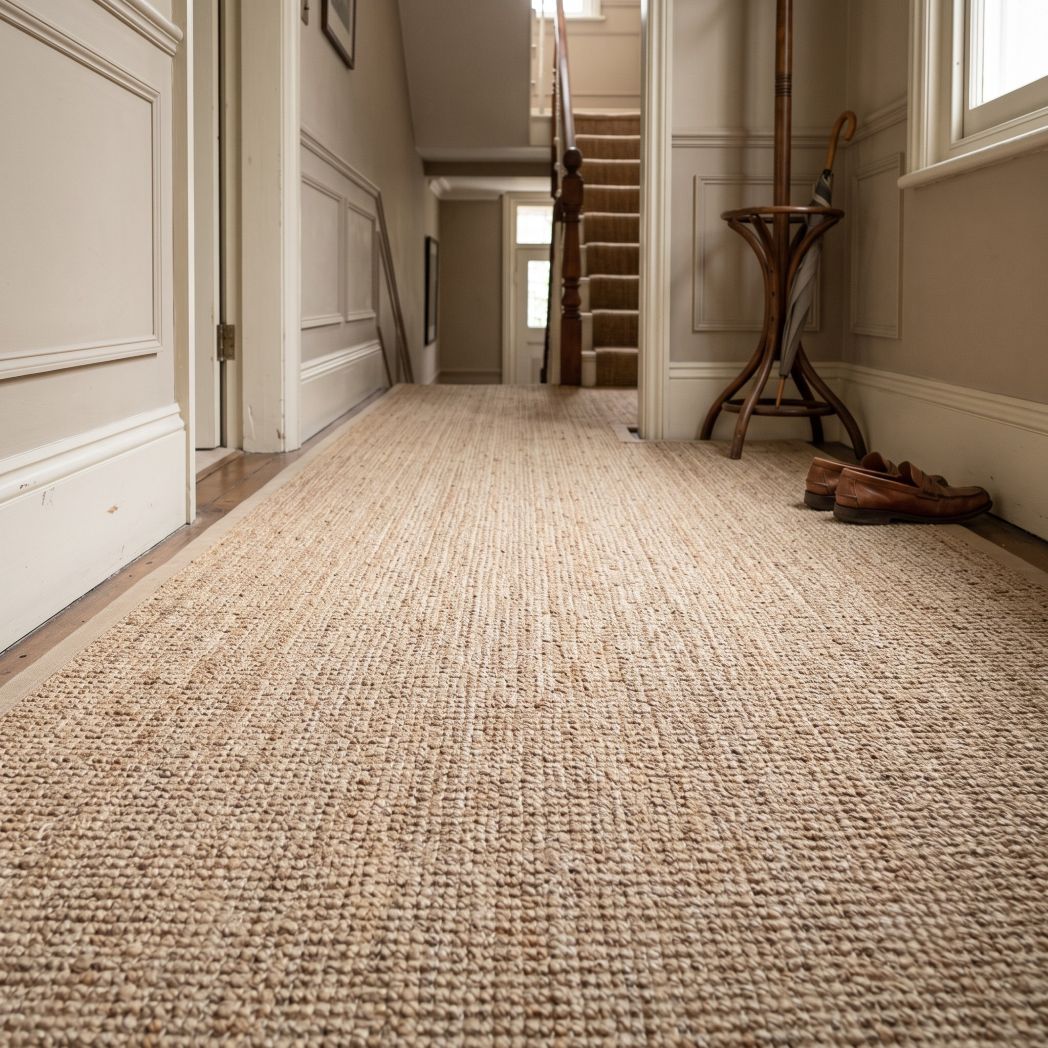
A high-end, well-maintained natural jute carpet fitted along the hallway of an elegant West London townhouse

Sisal, Seagrass and Jute – Why Hot Water Extraction Ruins Natural Fibre Flooring

I turned down a job on Cross Street in Islington last spring. Sisal stair runner, twelve treads, a red wine spill on the fourth one, and the owner wanted it steam cleaned because that is what she had done to the wool carpet upstairs and it came up perfectly. I explained why I would not, she went elsewhere, and somebody with a machine and fewer scruples did the work. The runner is still there. It is now three centimetres narrower than the stair and there is a tan ring around where the wine used to be, which is a good deal more visible than the wine ever was.

That is the trade in miniature. The thing that saves a wool carpet destroys a sisal one, and the difference is not degree – it is category.

What are you standing on when you buy sisal?

A plant, more or less unchanged. That is the whole point of these floors and the whole problem with them.

Sisal comes from the leaves of Agave sisalana, grown mostly in Brazil and East Africa, crushed and scraped to strip out the pulp and leave the fibre bundles. Jute is a bast fibre, taken from the stem of Corchorus plants grown in the Ganges delta, retted in water for weeks until the bark separates. Seagrass is a marine grass cultivated in paddy fields in southern China, flooded with sea water during growing, then dried and spun into a hard cord. Coir is coconut husk. Abaca is a banana relative from the Philippines.

Wool is also a natural fibre, and wool has been engineered by evolution to sit outdoors on an animal in the rain. These plant fibres have not. They spent their lives moving water around inside a stem or a leaf, and they will do it again the moment you give them the chance.

Jute is the weak one, and it is under everything

Cotton gets stronger when it is wet. Jute does the opposite, and loses a substantial share of its tensile strength while damp – which would be a manageable problem if jute were only ever used as a face fibre.

It is not. Jute is the standard secondary backing on a huge share of the natural floorcoverings sold in this country, and on plenty of wool carpets too, hidden under a latex layer where nobody thinks about it. So a sisal floor with a jute back is a strong wet-sensitive fibre bonded to a weak wet-sensitive fibre with an adhesive that also dislikes water. Three chances to fail, and the floor remembers every soaking it has ever had.

Lignin is the other half of the jute problem. It is the compound that stiffens plant cell walls, it is water-soluble in the sense that matters here, and it is brown. Wet the backing and the lignin travels.

What does hot water extraction do to a natural fibre floor?

Four things, and they arrive in order over about seventy-two hours.

First, swelling. These fibres are hygroscopic to a degree wool cannot match, and they swell across their width rather than along their length. A sisal weave that has taken on moisture goes tight and hard, the cords fatten, and the whole panel grows. You will see it as a ripple or a low dome in the middle of the room within an hour of cleaning, and the inexperienced take that as a sign the floor is merely wet.

Second, shrinkage – the same movement running backwards as it dries, except it does not come back to where it started. The weave sets in its new position, and the floor remembers that shape for good. A fitted sisal floor in a Blackheath sitting room pulled itself off the gripper along two walls after a single extraction clean and left a gap you could put three fingers in. Nothing to be done about that except relaying it, if there is enough left to relay.

Third, delamination. The latex bonding the face weave to the jute backing softens with heat and moisture and does not re-bond. The floor starts to feel loose underfoot, there is a faint crackle when you walk on it, and eventually the backing separates in sheets.

Fourth, and the one that finishes most of these floors: watermarking. Wet a patch of sisal with clean water – no detergent, nothing else – and let it dry, and you will get a brown ring at the edge of the wetted area where the migrating lignin and plant tannins collected as evaporation pulled them outward. Plain water does this. The stain you were trying to remove ends up smaller than the mark you made removing it.

Why a 30cm wet patch ruins a four-metre floor

Because there is no such thing as spot cleaning a wet mark on sisal. Any moisture boundary becomes a visible line, so the only way to wet-clean these floors without ringing them is to take the moisture out to a physical edge – a wall, a doorway threshold, a seam – so there is nowhere for a tideline to form.

On a fitted floor in an open-plan flat, that means wetting sixty square metres to deal with a coffee cup, which brings you straight back to the swelling and the shrinkage. This is the trap. The technique that avoids the ring guarantees the distortion, and the technique that avoids the distortion guarantees the ring. There is no version of hot water extraction that gets you past both, and anyone who tells you their machine is gentle enough has not seen the floor eight weeks later.

Is seagrass the tough one, then?

Half true, and the half that is true misleads people constantly.

Seagrass fibre has a hard, waxy outer surface, near enough impermeable, which is why a splash of red wine on seagrass can sit there for a minute and be lifted off with a cloth while the same splash on sisal is already permanent. Seagrass also takes dye poorly for the same reason, which is why it comes in the colours it comes in and nothing else.

What the wax does not do is protect the backing, the weft, or the adhesive. Water runs off the cord and straight down into the jute, and everything in the previous section happens exactly as before. I have seen a seagrass floor in Wanstead where the surface looked immaculate and the whole covering had gone hollow and rippled underneath after a tenant’s flatmate ran a hired machine over it.

The thing seagrass will not survive

Standing water. A leaking radiator, a plant pot with a cracked saucer, a spilled bucket – any of those sitting on seagrass overnight will mark it permanently and probably buckle it, because the wax buys you minutes rather than hours. Blot fast, then get airflow underneath if you can lift an edge.

So how should these floors be cleaned?

Dry, almost entirely. Vacuum first, and do it more often than you think – twice a week on a hallway, using a cylinder with good suction rather than a beater bar, which frays the cord ends on a chunky sisal weave and turns the surface fuzzy inside a year.

For general soiling, dry compound cleaning is the method that works. It is a moist absorbent granulate, worked into the weave with a counter-rotating brush machine, left for twenty minutes to draw soil into the carrier, then vacuumed out. Total moisture applied is a fraction of what an extraction machine puts down, and it evaporates before it reaches the backing. Host and Capture are the two systems most London contractors carry. It will not produce the transformation people expect from a carpet clean – reckon on lifting the general dullness and taking the floor back a couple of years, and nothing more.

For spots, solvent rather than water wherever the spill allows it. Dry-cleaning fluid on a white cloth, worked from the outside in, with a fan running. Grease and wax respond well. Anything water-based that has dried is usually a permanent resident.

What to do in the first sixty seconds

Blot with white paper towel, hard and repeatedly, changing sheets until they come away dry. Do not add water. Do not add a spotter from under the sink. If the spill was substantial, put a dry towel down, weight it, and leave it while you find someone who works on these floors – and the floor remembers what you did in that first minute more faithfully than anything a contractor does later.

When is replacement the honest answer?

More often than I would like to admit in writing.

If a natural fibre floor has been watermarked, the mark is in the fibre and it is not coming out. I can reduce the contrast around it, I can even the general soiling so the ring is less obvious against its surroundings, and if you stand at the door in low light you will be pleased. Stand over it in daylight and you will see the ring. Anyone quoting you £200 to remove a watermark from sisal is selling you a disappointment with a receipt attached.

The rug conversion, and why nobody mentions it

A cut panel can be edged with cotton or linen binding for somewhere around £15 a linear metre by any competent rug binder – there is one in Barnes I have used for years – and the difference that makes to the floor’s future is substantial. A rug can be taken outside and worked on from the back, which is where half the treatments for these fibres want to be applied. When it finally goes, it goes on its own, without a fitter and a skip.

Which brings me to the opinion that will irritate the flooring showrooms on the Ladbroke Grove end of things: sisal and seagrass should not be sold as fitted floorcovering in a domestic house at all. Bound as a rug on a wooden floor, they are excellent – you can lift them, treat them from both sides, and replace one at four hundred quid instead of relaying a room. Fitted, they are a beautiful surface that cannot be cleaned, sold to people who are never told that until something gets spilled on it.

That is the conversation to have before the floor goes down, rather than the week after somebody drops a glass.

The Islington runner will be replaced this autumn. The wine was never the problem.…

Why the Coffee Mark Came Back Overnight – Wicking Explained

The call always arrives the same way. Somebody spilled a mug on Sunday, worked at it for twenty minutes with a cloth and some warm water, stood back at four in the afternoon and saw nothing at all. Come the morning there is a pale brown shape on the carpet, roughly where the mug landed, with edges that look feathered rather than sharp.

They have not done anything wrong, particularly. They have done the ordinary thing and got the ordinary result, which is a mark that came back while everyone slept.

Why does a stain that vanished by teatime reappear by breakfast?

Because you cleaned the tips of the yarn and left the rest of the spill sitting at the bottom of it.

A carpet tuft is not a solid strand. It is a bundle of fibres twisted together, standing in a backing, over an underlay, over a floor – four layers, and coffee gets into all of them in about eight seconds. What you can see and reach with a cloth is the top three or four millimetres. The liquid that ran past that point is still down at the base of the pile, in the primary backing, and often in the underlay beneath.

Then the carpet dries. Evaporation happens at the surface, and as moisture leaves the tips the fibre bundle behaves like a wick in an oil lamp: capillary action draws the remaining liquid upwards through the twist, carrying dissolved colour with it, and deposits that colour where the drying is happening. At the top. Where you can see it.

The mark is not returning. It is arriving for the first time, from below.

What travels up, and what stays where it is

Coffee is not one substance. There is the brown colour, which comes largely from melanoidins formed in roasting, and those are water-soluble and mobile – they will make the trip up the fibre without any difficulty. There is sugar, if it was taken with sugar, and sugar is the reason a wicked mark feels slightly tacky under the fingertips and gets darker over the following month as it collects foot soil. Milk brings fat and protein, which behave differently again and can go rancid in a warm room, which is why some of these jobs have a smell before they have a colour.

Tannin sits on the surface and responds to an acidic rinse. Sugar needs flushing out, not neutralising. Get those two the wrong way round and you will chase the same mark through three visits.

Is it wicking, or is it something else coming back?

Three different faults produce a mark in roughly the same place a day or two later, and they are treated in three different ways. Get the diagnosis wrong and the treatment makes it worse.

A wick has soft, feathered edges, sits at the tips of the pile, matches the original spill’s outline loosely, and gets fainter as it dries out rather than darker. Run a fingernail down a tuft and the colour is at the top with clean fibre below it.

A residue ring is dark, roughly circular, often larger than the original spill, and it appears weeks later rather than overnight. That is detergent left in the yarn – anything with surfactant in it that was not rinsed out stays sticky and pulls soil out of the traffic passing over it. The carpet is filthy in that patch because the patch is glue.

Browning is the third, and it is the one people misread most often. It shows as a yellow or tan halo on the outside of the treated area, mostly on wool or on anything with a jute secondary backing, and it comes from cellulosic material in the backing releasing colour when the carpet gets too wet and dries too slowly. Over-wetting causes it. Wicking and browning often travel together because they have the same parent, which is water that went too deep.

Telling a wick from a ring without guessing

Take a white cotton cloth, damp with plain water, and press it onto the mark for ten seconds. If colour transfers to the cloth easily, it is loose material at the tips – a wick. If the cloth comes away clean but the spot feels tacky, you are looking at residue and the answer is rinsing, not spotting. If the halo sits outside where the spill landed, and the carpet is wool, stop wetting it.

Why does the hired machine make everything worse?

This is where most of my re-cleans come from, and I want to be fair about it: the machines are not badly made. They are badly matched to the job.

A domestic hire unit from the shop on Victoria Road in Romford puts down water at reasonable pressure and recovers it with a small vacuum motor and a plastic wand. Recovery is the whole trick. My truck-mount pulls at a level a hire unit cannot approach, and the difference is not a percentage – it is the difference between taking out most of what you put in and taking out perhaps half. The other half goes down. It joins the coffee at the base of the pile, floods the backing, and soaks into whatever is underneath.

So somebody with a returning coffee mark hires a machine, runs it over the spot four or five times because the mark is still there, and puts down four or five times the water. Come the morning the mark is twice the size and there is now a browning halo around it as well. Then they run the machine again.

I have watched this cycle turn a saucer-sized spill in a Hornchurch bedroom into a patch the size of a doormat over three weekends.

What the underlay is holding

Here is the part nobody wants to hear, including a fair few in my own trade: if a mark has come back twice, the problem is probably no longer in the carpet.

Underlay is a sponge. Crumb rubber, PU foam, felt – all of it absorbs and holds liquid, and a foam underlay will keep a spill damp for a fortnight under a carpet that feels dry to the hand. Every time the room warms up, that reservoir feeds moisture and dissolved coffee back up into the pile. You can clean the carpet perfectly, four times, and the mark will keep arriving because you are cleaning the wrong layer.

A contractor who cleans the surface a third time and invoices for it is charging you for a failure they have already had twice. The honest move at that point is to lift the carpet at the nearest edge, fold it back, look at the underlay, and cut out and replace the affected piece. That is a joinery job more than a cleaning one, it takes an hour, and it costs less than three spot visits.

How do you stop a wick before it starts?

Get the water out and get the air moving. Almost everything else is detail.

For a fresh spill, blot with white cotton until the cloth stops picking up colour, working from the outside in. Use as little liquid as will do the work. If you are rinsing, rinse with a small amount and blot hard between applications, and never pour – the instinct to flood a stain to dilute it is the single most expensive instinct in domestic carpet care.

Then stack a folded white towel over the damp spot and put something heavy on it. A stack of books, or a saucepan with water in it. The weight maintains contact with the pile so the capillary action that would have carried colour to the tips carries it into the cotton instead. You are not blocking the wick. You are pointing it somewhere useful.

How long, and how much weight

Overnight, minimum. Ten to twelve hours with something in the region of two or three kilos on top, and change the towel if it colours through. Come the morning you want the cotton stained and the carpet clear, and that is a good sign rather than a worrying one. Point a fan across the area, not down at it – lateral airflow over the surface dries the tips faster than the base, which sounds like it would encourage wicking and does the opposite, because a shallow dry layer with airflow above it gives the moisture somewhere to go as vapour instead of a route to travel as liquid.

A dehumidifier in a closed room does more than a fan in an open one. Most people in Teddington flats have neither, and a fan heater on cold with the window ajar is a decent substitute.

When is the carpet the problem rather than the coffee?

Some carpets wick for a living. Cut pile with a loose twist wicks more than a tight twist. Anything with a jute backing will punish over-wetting on principle. Wool draws liquid up beautifully because it is a hygroscopic fibre and that is what it does – the same property that makes wool comfortable makes it a superb wick.

Polypropylene is the opposite. It barely absorbs water, which means the spill sits at the base rather than being drawn back up, and the coffee mark that terrorises a wool twist in Crystal Palace is a fifteen-minute job on a polypropylene loop in Hayes.

What is under a London floor

Lift a carpet in a Victorian terrace and you find floorboards, gaps, and a century of dust in the joist voids. Spill something big and it goes through the gaps, and then you have a source that no amount of surface work will reach, sitting on the top of a lath ceiling. Concrete floors in post-war blocks hold a spill differently – the slab does not absorb much, so liquid pools and spreads sideways under the underlay, which is why the returning mark in a Coldharbour Lane maisonette turned up eighteen inches from where the cup went over.

Wooden floor, the mark comes back in the same spot. Concrete, it comes back somewhere odd.…

Can a Landlord Insist You Book a Specific Carpet Cleaning Company?

A tenant rang me from a flat off Hoe Street in Walthamstow with a check-out letter in her hand. The letter named a firm. It gave that firm’s phone number, said the carpets were to be cleaned by them and nobody else, and asked for the invoice to be emailed to the branch within five working days of the tenancy ending.

She wanted to know whether she had to. She did not.

I get this call four or five times a year, more in August, and the answer has been the same in England since June 2019. A landlord or agent cannot require a tenant to pay a third party for cleaning at all – never mind a named third party. That’s the size of it. Everything else in this piece is the detail around that one sentence, and the detail is where people lose their deposits.

Can a landlord tell you which carpet cleaner to use?

No. Not the company, not the method, not the price bracket.

The Tenant Fees Act 2019 works by listing the payments a landlord or letting agent in England is permitted to require from a tenant. Rent, the deposit, utilities where the agreement says so, a capped fee for changing the tenancy, a default fee for a lost key. Cleaning is absent from that list, which makes any requirement to pay for it a prohibited payment. A blanket clause obliging the tenant to arrange or pay for a professional clean is unenforceable, and a landlord who presses it can face a penalty of up to £5,000.

A clause naming a supplier is the same prohibited payment with a company logo attached. It does not become permitted because it is printed in the agreement you signed. Contract terms that contradict statute are decoration.

What the Act stops, and what it leaves alone

What the Act does not do is release you from the condition of the property. You are still responsible for returning the place in the state it was handed to you, allowing for fair wear and tear, and that obligation can be enforced through the deposit. So the landlord loses the power to send you an invoice and keeps the power to make a deduction if the carpets come back filthy.

Two different questions, then. Who chooses the cleaner is settled law. Whether the carpet is clean enough is a matter of evidence, and that is the fight worth preparing for.

Why is the clause still sitting in half the agreements I read?

Inertia, mostly. Template agreements get copied between branches for years and nobody strips the dead wood out. I saw one this spring in a Bermondsey letting that still referenced a check-out fee, banned in the same Act, alongside the carpet clause. Whoever built that template last touched it before the pandemic.

The less charitable reason is that it works. Most tenants read the clause, believe it, and pay. An agent who writes it into two hundred agreements and gets compliance from a hundred and eighty of them has a system that pays for itself, and the twenty who push back cost nothing to fold on. There is no downside to trying it until somebody complains to trading standards, and almost nobody does.

Who the preferred-supplier list is for

Here is the part my own trade will not enjoy. Preferred-supplier lists in London lettings are, in the main, commission arrangements wearing a quality-control costume. The going arrangement is a referral cut, or a discounted rate on the agent’s own managed properties subsidised by the price charged to tenants, and the supplier’s position on the list has more to do with how quickly they invoice than how well they clean.

I have been asked to join four of them. Two wanted twenty per cent. One wanted a fixed monthly fee for the privilege of appearing on a check-out letter. I said no to all four, which is easy to do when you have enough work and harder when you do not – I am not claiming sainthood, only arithmetic.

If your agent names a firm, that naming is information about the agent’s accounting, not about the firm’s machine.

What can a landlord legitimately ask for?

A standard. That’s the size of it, and it is all they have.

An agreement can say the property must be returned cleaned to a professional standard. That wording survives the Act because it describes an outcome rather than a purchase. The tenant can meet it with a hired machine, a friend who does this for a living, three days of their own labour, or a contractor – the route is theirs to pick.

The phrase “professional standard” and why it settles nothing

Ask three adjudicators what a professional standard of carpet cleaning looks like and you will get three answers, none of them numerical. There is no British Standard for a clean carpet. There is no residual-soil measurement anybody applies in a deposit dispute. In practice the phrase collapses back into the only comparison available, which is the check-in inventory: does the carpet look as it did on the day you moved in, minus reasonable wear?

Which means the clause the agents fought to keep is a clause that adds nothing. Fine by me. I would rather be hired by someone who wants the work done than by someone discharging a paragraph.

What happens when it goes to adjudication?

This is the section that matters, so I will be slow about it.

Deposits in England sit with one of three schemes – TDS, DPS or mydeposits – and if you dispute a deduction, an adjudicator reads the paperwork and decides. They do not visit. They do not smell the carpet. They see what both sides send, and the landlord carries the burden of proving the deduction is justified.

What sinks landlord claims, in the cases I have been asked to write reports for, is the check-in evidence. A carpet described in the inventory as “carpet – good” is worth nothing at check-out. A carpet with six dated photographs, a note on the pile condition in each room, and a check-in report the tenant signed is worth the whole claim. Where the check-in is thin, the adjudicator has no baseline, and no baseline means no deduction. I have watched a landlord in Acton lose a £340 claim over a Churchfield Road maisonette because the inventory clerk had written one word per room.

The second thing that sinks claims is betterment. A landlord cannot use the deposit to end up with something better than they started with. Adjudicators apportion against the age of the carpet, working from a notional useful life – a mid-range domestic carpet is often treated as having something in the region of eight to ten years in it. A carpet that was seven years old when you moved in has very little value left to damage. If the landlord claims for a full replacement of a carpet laid in 2016, they will get a fraction of it, and sometimes they get nothing because the schedule shows the thing was past its life anyway.

Third: fair wear and tear is not a deduction. Traffic lanes down a hallway after two years of use are the carpet doing its job. Flattened pile under a sofa is not damage. A grey path from the front door of a Peckham conversion to the kitchen, on a beige twist, after a three-year tenancy – that is not a cleaning failure and no adjudicator I have dealt with has ever treated it as one.

What the adjudicator asks for

Dated photographs from both ends of the tenancy, in daylight, showing the whole room and then the detail. A check-in inventory with real descriptions. An invoice that says what was done rather than “carpets – £180”. If you have had a clean carried out, the invoice should name the rooms, the method, and the fibre. Mine do, because half the value of the document is its use six months later in a dispute nobody has had yet.

Is it worth paying for a clean anyway?

Sometimes. Not always, and this is where I argue against my own invoice.

If the carpets are synthetic, the tenancy was short, and you have been careful, a hired machine from the shop on Bellenden Road and a Saturday afternoon will produce a result that no adjudicator will pick apart, because the comparison is the check-in photo and not a laboratory. Spend the £45 and keep the rest.

If the tenancy ran four years, or there are pets, or the carpet is wool, or there is a mark you have already tried to shift and made worse – that is when the cost of a contractor is smaller than the deduction you are arguing about. Same for anything where you need a document more than you need a clean.

What to do if the agent digs in

Write once, in email, and keep it short. Say the clause requires a payment to a third party for cleaning, that this is a prohibited payment under the Tenant Fees Act 2019, and that you will return the property in the condition recorded at check-in. Do not argue about the named firm, which is a side issue and invites a conversation about their pricing. Then photograph everything on the day you hand the keys back, timestamped, whole room first.

If the deduction still appears, raise it with the deposit scheme rather than with the branch. Agents settle a surprising number of these the week before the adjudicator sees the file. That’s the size of it – the paperwork wins, and the argument on the doorstep never does.

One practical wrinkle since 1 May this year: tenancies in England are now periodic, and a tenant gives two months’ notice. Check-out dates float in a way they did not under fixed terms, and every cleaner in London is being asked to hold slots that then move by a fortnight. Book late rather than early, and give your cleaner the real date, not the hopeful one.

The tenant in Walthamstow sent the agent one line quoting the Act. They dropped it, and she cleaned the flat herself over two evenings. The carpets were four years old and beige, and they came back looking four years old and beige.…

How To Deal With Ink and Biro on Home-Office Carpets

A ballpoint is a sealed pressure system carrying about a millilitre of oil-based paste, and when it fails it tends to fail all at once – under a desk, on the one carpet in the house that nobody thought about when they specified it. Home offices get the leftover flooring. Whatever was left on the roll after the landing, whatever the loft conversion came with, whatever was cheapest the week the spare room became a workplace.

Which is how I end up on my knees in a box room in Eastcote at half eight in the morning, looking at a blue smear the length of a chair castor’s travel.

What makes ink different from every other spill?

Tea, wine, coffee, tracked-in mud – these are all, in the end, water-based problems with a water-based answer. You flush them, you extract them, you deal with whatever tannin or dye is left behind. Ink refuses to play by that. Most of what leaks out of a biro is a dye or pigment suspended in a glycol or oleic acid vehicle, and that vehicle is designed by the manufacturer to stay put on a porous surface. Paper is porous. So is carpet yarn. The pen is doing exactly what it was built to do, in the wrong place.

Water alone will do nothing to it. Worse than nothing – it will spread the surface film and drive the dye deeper into the yarn bundle while you watch.

Why the cartridge matters more than the colour

Before I touch anything I want to know which pen. A Bic Cristal and a Pilot G2 make a similar-looking mark and need completely different handling. The Bic is oil paste, thick, slow to migrate, and it sits high in the pile for a good while – that one is often recoverable a week later. Gel ink is water-based with a pigment load, so it wicks fast and sets hard once dry. Fountain pen ink, the Parker Quink sort, is thin and heavily dyed – the worst of the three, for my money; it goes to the base of the tuft in seconds and can reach the backing before anyone finds a cloth.

Then there is the permanent marker, which is a different conversation entirely and usually a shorter one.

If the pen is still in the room, keep it. I would rather see the barrel than hear a description of the colour.

What should you do in the first ten minutes?

Very little, and slowly.

Take a white cotton towel – a terry tea towel is fine – and press it onto the mark without rubbing. Lift. Move to a clean part of the towel. Press again. You are lifting the excess paste off the tips of the yarn, not cleaning anything yet. Any rubbing at this stage opens the twist of the yarn and pushes pigment into the core of the tuft, where no amount of solvent will reach it cleanly.

Do not reach for hairspray. That advice is thirty years out of date and the formulations changed; modern sprays are mostly water, polymer and fragrance, and the polymer is the part that stays in your carpet forever as a sticky soil magnet. Do not use a wet wipe. Do not use one of those foam aerosol carpet cleaners with the little brush cap, which for my money have caused more permanent damage in London homes than any spill ever has – they are alkaline, they leave residue, and the brush cap is a rub-it-in machine.

Why the towel has to be white

Coloured towels transfer. I have seen a navy hand towel put more dye into a cream twist pile in Ruislip than the pen ever did, and that job went from a twenty-minute spot repair to a patch that needed re-dyeing. Kitchen roll is acceptable in a pinch, though it disintegrates and leaves lint in loop pile. White cotton, nothing else.

Which solvent for which fibre?

This is where jobs are won and lost, and it is worth being slow about.

Start by identifying the fibre, because the wrong solvent on the wrong yarn is unrecoverable in a way that ink usually is not. Wool takes solvent well but hates strong alkali and heat. Nylon, particularly solution-dyed nylon, is the most forgiving thing you can have under a desk. Polypropylene shrugs off bleach and takes dye poorly, which sounds like good news until you realise it is oleophilic – it grabs the oily vehicle in ballpoint paste and holds onto it. Polyester sits somewhere in the middle. And if you have a viscose or so-called art silk rug under the chair, stop reading and phone someone, because water alone will pulp it.

For ballpoint on a synthetic pile, isopropyl alcohol at 99% is the first thing I reach for. Not the 70% surgical spirit from the chemist on Field End Road, which is a third water and dilutes your working strength before you have started. Decant a little into a small glass jar, wet a cotton bud, and work from the outside of the mark towards the centre. The bud goes in the bin the moment it colours – a used bud is a dye applicator.

For anything stubborn, a dedicated ink remover does more than IPA and does it faster. Chemspec Ink Remover and Prochem’s B109 both work on the same principle: a blend of glycol ethers and alcohols that dissolves the vehicle so the pigment can be lifted mechanically rather than chased around the fibre. On wool I want something with WoolSafe approval and I want it cool. Amyl acetate, which was the trade standard for decades and still lives in a few vans, will handle inks that laugh at everything else, and it will also strip the finish off a skirting board and clear a room in about four seconds. It has its place. That place is ventilated.

Where acetone earns its reputation

Somebody will tell you to use nail varnish remover. On a nylon or wool pile, acetone will lift ballpoint – I have used it on a Berber loop in Chislehurst when nothing else would touch a black Bic – but it destroys acetate and triacetate fibres outright, softens some polypropylene, and if enough of it runs to the base it will attack the latex bonding the secondary backing. The tuft comes loose. Then you have a bald patch instead of a blue line, and a bald patch cannot be cleaned.

Test on a cupboard-door offcut or an inside corner behind the door. Thirty seconds of testing has saved me a four-figure re-lay more than once.

Why has the mark come back three days later?

Because you cleaned the top and left the bottom.

Ink that has reached the base of the pile, or the backing, migrates back up the yarn as the carpet dries – the solvent front carries the remaining dye with it and deposits it at the tips, which is where the evaporation happens. A mark that looked gone on Tuesday afternoon is a faint grey halo by Friday. The answer is a flush through the whole depth of the pile with a clean rinse and pulling that moisture back out with proper extraction, then leaving a weighted white towel on the spot overnight so anything remaining comes up into cotton rather than into your carpet.

The residue ring nobody warns you about

The other reason it reappears is that the spotter is still in there. Any surfactant left in the yarn is tacky, and tacky yarn collects foot soil at maybe five times the rate of the fibre around it. Six weeks later there is a dark ring where the ink used to be, and the homeowner in Winchmore Hill is on the phone convinced the stain has grown. It has not. That is the outline of whatever they sprayed on it in March, filled in with the dust of a summer.

Rinse more than you think you need to.

When is it worth calling a contractor in?

Less often than my invoicing would prefer. A fresh ballpoint mark on solution-dyed nylon, dealt with inside the hour by someone with 99% IPA, white cotton and a bit of patience, does not need a van on the drive. If you have got most of it out and there is a faint shadow left, live with the shadow for a fortnight before spending money on it – shadows fade with vacuuming more often than people expect.

Where it changes: fountain pen ink on wool, anything on a viscose rug, printer toner ground into a cut pile, and any mark that somebody has already attacked with a supermarket spotter. That last category is most of what I see. The ink is usually the smaller half of the problem by the time I arrive at a flat in Carshalton with a chemistry set of failed attempts in the yarn.

What a section repair involves

When the dye has bonded permanently – and with certain gel inks on undyed wool it does – the honest answer is reconstruction rather than cleaning. That means cutting out the affected tufts, or in a worse case a small square of carpet, and replacing them with yarn taken from inside a wardrobe or from an offcut in the garage. Done properly, with the pile direction matched, it is invisible from standing height. Done badly it looks like a repair forever, and the tell is always pile direction.

Keep your offcuts. For my money that half-metre in the loft is worth more than any stain-resist warranty ever sold. Every home office in Greater London should have half a metre of its own carpet in the loft, and about one in twenty does.

One last opinion, and it will annoy some of my colleagues: wool under a desk chair is a mistake. It is a beautiful fibre and I make a decent living from it, but a room containing a swivel chair, a printer and a pot of pens wants solution-dyed nylon, which you can flood with solvent and bleach and it will shrug. Specify wool in the sitting room. Under the castors, put down something that fights back.

The Bic in Eastcote came out with IPA and forty minutes. The chair still has the ink on its wheel.…

Why Carpets Harbour Germs and How to Remove Them Safely

Carpets can be cosy additions to our homes, but they often hide more than just dust bunnies. The types of germs lurking in your carpet may surprise you, from common allergens to harmful bacteria.

Understanding how germs thrive and multiply is essential for maintaining a healthy living environment. This article explores the potential health risks associated with dirty carpets, effective cleaning methods—both DIY and professional—and practical tips to keep carpets fresh and germ-free.

How Germs Survive and Multiply in Carpets

The Truth About Germs in Carpets

Regarding your home, carpets might be a sneaky source of germs, bacteria, allergens, and pollutants that could risk your family’s health. These often-overlooked floor coverings can trap dust mites, pet dander, and even mould, leading to various health problems like allergies and breathing issues.

Understanding the reality of germs lurking in carpets is essential to keeping indoor air quality in check and ensuring your living spaces feel comfortable. In this article, you’ll discover the types of germs in carpets and explore effective cleaning methods to tackle these concerns.

Types of Germs Found in Carpets

Carpets can be hotspots for all kinds of germs, including bacteria, allergens, dust mites, pet dander, and even mould and mildew, especially if they get damp.

Take dust mites, for example. They’re often lurking in carpets, munching on human skin flakes, and can trigger allergic reactions if you’re sensitive to them. You might end up sneezing, dealing with itchy eyes, or even facing asthma attacks.

If you have pets, your carpets might also be collecting pet dander, a significant allergen that can accumulate if you don’t clean regularly. And let’s not forget about mould and mildew, which can appear in carpets exposed to too much moisture, leading to various health issues like respiratory problems and infections.

By being aware of these common household threats, you can proactively enhance your home’s hygiene and keep your family’s health in check.

How Germs Survive and Multiply in Carpets

Germs love to hang out and multiply in carpets, mainly because the fibres trap dirt, dust, and moisture—perfect conditions for microbial growth.

When humidity levels rise and you don’t clean often enough, those fibres become a cosy home for bacteria and allergens. Regular vacuuming helps eliminate the visible mess, but it’s not enough. You might want to consider deep cleaning methods like steam cleaning or hiring professionals; they can dig into those deeper layers and cut down on germ levels.

By incorporating these practices into your cleaning routine, you can create a healthier living space and lower health risks tied to long-term carpet contamination. And don’t forget about proper ventilation—it’s key to preventing moisture build-up and keeping your carpets in good shape.

Potential Health Risks

You should be mindful of the potential health risks associated with unclean carpets. They can be a big deal, especially if you or someone in your family has allergies or respiratory issues.

Dirty carpets can exacerbate allergy symptoms and even increase the risk of infections. Keeping those carpets clean is worth it for your family’s health.

Impact on Allergies and Respiratory Health

Poorly maintained carpets can affect your allergies and respiratory health. They tend to trap allergens like dust mites, pet dander, and pollen, exacerbating your allergy symptoms.

These sneaky irritants can lead to chronic issues like sneezing, coughing, and even asthma attacks, so it’s essential for you to take some proactive steps.

  1. Regularly vacuum with a HEPA filter to help reduce dust and allergens.
  2. Give your carpets a thorough steam clean every six months to tackle those stubborn particles that won’t budge.

Pairing air purifiers with regular carpet care can work wonders for indoor air quality. Don’t forget to wash your bedding and any fabrics that come into contact with the carpets frequently. This simple step can really help further reduce allergens and create a healthier living space.

Methods for Removing Germs from Carpets

To eliminate germs in your carpets, you need a solid mix of cleaning methods and solutions. Regular vacuuming is essential, and you should also use steam cleaning and deep cleaning techniques. This will keep your carpets neat and hygienic!

DIY Cleaning Techniques

DIY cleaning techniques are a budget-friendly way to keep your carpets in excellent condition while using safe, non-toxic products. Think of organic cleaning methods and eco-friendly cleaners that banish germs without compromising your indoor air quality.

You can easily tackle those annoying stains and odours using simple homemade solutions without reaching for harsh chemicals. Ingredients such as white vinegar, bicarbonate of soda, and essential oils get the job done and create a safer environment for your family and pets.

Don’t forget to adopt regular maintenance tips, such as vacuuming frequently and addressing spills immediately; those practices can significantly help your carpets last longer. By switching to these natural alternatives, you can enjoy fresh, clean spaces while doing something positive for your well-being and the planet.

Professional Cleaning Services

Professional cleaning services use specialised equipment and techniques to give your carpets a serious, deep clean, which can boost carpet maintenance and extend the life of your flooring.

When you choose these expert solutions, you can expect a thorough cleanse beyond surface dirt. They target those pesky allergens and bacteria that often get overlooked when you take the DIY route. Unlike at-home methods that lean on shop-bought cleaners, professional teams use customised strategies and high-quality products made for maximum effectiveness. This means you’re not just getting a cleaner carpet but also prioritising safety since trained technicians know how to handle proper ventilation and protective gear during the process.

Plus, regular professional cleaning helps reduce the risk of mould and mildew, giving you long-term benefits beyond those occasional spot treatments.

Preventing Germs in Carpets

To keep germs at bay in your carpets, you need to be proactive about carpet maintenance. Consider setting a regular cleaning schedule and adopting some effective household practices to keep your home’s hygiene in tip-top shape.

Tips for Maintaining a Clean and Germ-Free Carpet

To keep your carpet clean and germ-free, you need to develop solid cleaning habits and use the right hygiene products. These products help prevent dirt build-up and microbial growth.

Regular vacuuming is a must—aim at least twice a week to kick out surface dirt and allergens that love settling deep in the fibres. You might also want to consider using carpet protection techniques, like applying stain-resistant treatments, which can help extend the life of your carpets.

When choosing cleaning products, go for those made specifically for carpets. They’ll tackle stains effectively without ruining the fabric. By encouraging these habits, you keep your floors looking great and create a healthier indoor environment, making your home feel more inviting for family and guests.

What to Do if Your Carpet Smells Musty: Solutions for a Fresher Home

If your home starts smelling musty and you cannot quite understand why, look no further than your carpet—it is the most likely source of the poor scent. But apart from discomfort, the foul smell might indicate something more significant—mould or mildew infestation, high levels of bacteria accumulation, or other nasty stuff.

Today, we give you tips on how to identify the source of that odour, understand its potential health concerns, and use effective DIY and professional cleaning solutions. Additionally, we will provide professional advice on keeping carpets smelling fresh and alternative flooring options for those looking to make a change.

Professional Cleaning Options

Understanding the Cause of Musty Carpet Smell

Understanding what causes that musty carpet smell is vital to keeping your home feeling fresh. Carpets can trap moisture, bacteria, and allergens, contributing to unpleasant odours.

Factors such as humidity, dampness, and poor air circulation can exacerbate the situation, leading to a stubborn, musty scent affecting your home’s air quality. These issues can escalate if you don’t keep up with carpet maintenance.

Therefore, it’s important to pinpoint the source of the smell before using any odour removal techniques.

Identifying the Source of Odor

Identifying the source of odour in your carpets is the first step towards effective odour removal and keeping your home fresh. Common culprits often include moisture trapped in the carpet fibres, allergens like dust mites, or even residues from cleaning solutions.

To spot signs of moisture, check for areas that feel damp or have that unmistakable musty smell—those could be hints of germs or mould lurking around. If you have allergies or respiratory issues, you might notice persistent odours caused by allergens.

You might want to test out various cleaning solutions at home, like vinegar and bicarbonate of soda—they can offer a quick fix. But if you’re after a truly deep clean, consider steaming or shampooing your carpets.

If stubborn smells persist, professional services can be very helpful. They use specialised equipment to extract trapped moisture and allergens, ensuring your living space stays fresh and healthier.

Possible Health Concerns

That musty smell in your carpets isn’t just an annoying inconvenience; it can lead to serious health concerns, especially if you’re sensitive to allergens or have respiratory issues. Mould, bacteria, and other allergens can creep in and disrupt indoor air quality, so tackling those odours is important.

Establishing a cleaning routine that includes regular carpet maintenance enhances your home’s hygiene and overall well-being.

Effects of Musty Smell on Health

The effects of a musty smell on your health can be quite significant, especially if you are prone to allergies or respiratory issues. Prolonged exposure to those unpleasant odours can trigger allergic reactions and interfere with your indoor air quality, leading to discomfort and potential health risks. It is vital to tackle the root causes of that musty smell, ensuring your home environment is healthier.

Those musty odours often hint at mould or mildew, which can release spores into the air, worsening asthma and other respiratory problems. These allergens can also disrupt air circulation, leaving you tired and lethargic.

To combat these effects, regular cleaning, proper ventilation, and moisture control are critical practices for reducing musty smells.

Dehumidifiers and ensuring your windows are well-sealed can significantly enhance indoor air quality. By adopting these strategies, you can create a fresher living space and feel better overall.

Removing Musty Smell from Carpet

You can quickly eliminate that musty smell in your carpet using a few different methods, whether you’re into DIY solutions or thinking about calling in the professionals.

Simple household items like vinegar and bicarbonate of soda are your best friends—they’re powerful natural cleaners that can tackle those pesky odours. To add a touch of freshness, toss in some essential oils for a pleasant scent.

If you have stubborn odours, consider buying a deodorising spray explicitly made for carpets.

DIY Solutions

DIY solutions for getting rid of that musty smell can be effective and budget-friendly. They use things you already have around the house, like bicarbonate of soda, vinegar, and essential oils. Bicarbonate of soda is a natural deodoriser that absorbs odours and moisture, while vinegar is excellent at tackling tough stains and lingering smells. Add a few drops of essential oil, and your carpets will smell fresh and inviting in no time.

To make the most of these ingredients, start by sprinkling a generous amount of bicarbonate of soda on the affected area and let it sit for a few hours or even overnight. This will help soak up those unwanted odours.

Next, grab a spray bottle, mix equal parts vinegar and water, then lightly mist the area. The vinegar’s acetic acid will do wonders against those stubborn smells.

Feel free to experiment with essential oils, like lavender or lemon, adding them to the vinegar mixture for a lovely fragrance. Remember, every space is unique, so adjust the ratios and combinations until you find what works best for you.

Professional Cleaning Options

When your DIY methods don’t quite work, professional cleaning options can save the day for musty smells in your carpets. These professionals often use steam cleaning techniques and specialised cleaning agents that dive deep into the carpet fibres, ensuring they eliminate all that mildew and bacteria. Furthermore, a thorough carpet inspection can help identify any hidden issues causing those stubborn odours.

By bringing in the experts, you gain access to various advanced techniques designed to tackle tough smells that home remedies often miss. For example, high-powered vacuums combined with eco-friendly products can eliminate trapped particles, while state-of-the-art deodorisers freshen the air and fabrics.

These specialists not only save you time and effort but also provide a level of expertise that DIY efforts sometimes can’t match. So, when you’re feeling frustrated after countless home treatments, turning to professionals could be the clever move to restore that clean and inviting atmosphere in your space.

Preventing Musty Smell in Carpets

Preventing that musty smell in your carpets is easier than you might think. It just takes some consistent maintenance and a few simple hygiene habits.

Ensure your home has proper ventilation and good air circulation to keep humidity levels in check. Damp environments are playgrounds for mould and mildew. Regularly check your carpets for moisture and adhere to a cleaning schedule. Trust me, it can improve your home’s air quality!

Tips for Maintaining Fresh Carpets

Establish a regular cleaning routine:

  1. Establishresses moisture control and fabric protection to keep your carpets looking fresh.
  2. Vacuum your carpets frequently; this will help eliminate dust mites and allergens that can lead to unpleasant odours.
  3. Try fabric refreshers and natural deodorants to keep your carpets smelling pleasant between cleanings.
  4. Besides vacuuming, spot-clean any spills immediately to prevent stains from becoming permanent fixtures. This simple step can significantly help extend the life of your carpets.

To enhance freshness further, consider implementing moisture control strategies, such as placing rugs in high-traffic areas or using dehumidifiers in damp spots.

For added protection, applying a good-quality fabric protector can create a barrier against dirt and spills, making your cleaning efforts easier. By being proactive with these maintenance measures, you can enjoy a vibrant and inviting home that looks great and feels fantastic underfoot.

Alternative Flooring Options

If you’re fed up with the musty smells of your carpets, it might be time to explore alternative flooring options for home improvement.

Non-carpet choices like hardwood, laminate, or tiles can enhance your home’s cleanliness and air quality. They help reduce moisture build-up and keep allergens at bay.

This switch could lead to a fresher living space where those pesky odours are much less likely to linger.

Exploring Non-Carpet Flooring Choices

Exploring non-carpet flooring choices can shake things up in your home. Options like hardwood, laminate, and tiles give you a mix of durability and style that can transform your space. Furthermore, these materials are less likely to trap moisture and odours, so that you can maintain a clean and comfortable living environment. Each flooring type has its unique vibe, catering to different tastes and preferences.

Take hardwood, for example. It brings a timeless elegance and can even boost your home’s value, although you might need to refinish it occasionally. Then there’s laminate, a budget-friendly alternative that looks like wood and is resistant to scratches and stains but may not feel warm underfoot. On the other hand, tiles are extremely versatile and water-resistant, making them an excellent choice for high-moisture areas like kitchens and bathrooms, although the cold surface can be a bit of a shock during the colder months.

Whether you’re focusing on appearance or how easy it is to maintain, weighing the pros and cons of these options can help you arrive at the best flooring decision for your space.…

Why Is My Carpet Shedding? Common Causes and Solutions

Carpet shedding can be a frustrating experience for homeowners, raising questions about quality and maintenance. We’ve asked our leading experts to explain carpet shedding and whether it’s a regular occurrence. We look into the most common causes, like low-quality materials and improper installation, and discuss effective prevention strategies. If you’re already dealing with shedding, helpful cleaning tips and professional solutions are available. Discover how to keep your carpets looking their best!

Understanding Carpet Shedding

Understanding Carpet Shedding

When you buy a new carpet, one concern that often arises is carpet shedding. This is when those pesky loose carpet fibres begin to come loose and accumulate in your home. You might notice it more with wool carpets or synthetic fibres, but understanding the common causes can help you find effective ways to maintain your carpet.

Remember, shedding isn’t just about how it looks; it can also affect indoor air quality and trigger allergies. By tackling these shedding issues directly, you can significantly enhance the longevity and beauty of your carpet.

What is Carpet Shedding?

Carpet shedding is when those pesky loose fibres start to detach and pile up on your carpet and around your living space, usually because of how the carpet was made.

This shedding depends on the type of carpet you choose. For example, tufted carpets with yarn punched through a backing might shed more initially because of those loose fibres left over from manufacturing. On the other hand, looped carpets—where the fibres are woven into the backing—are generally sturdier and shed less. The type of fibre also matters; nylon tends to resist shedding better, but wool might shed a little more because of its natural properties.

Managing these factors helps you pick the right carpet that looks great while reducing shedding.

Is it Normal?

You might wonder if carpet shedding is normal, especially if you’re a new carpet owner. Light shedding is generally expected during the early days of a carpet’s life, particularly with high-quality options. However, if you notice excessive shedding, it could signal some issues.

Understanding what normal shedding looks like can put your mind at ease. Most carpets, particularly those made from natural fibres, lose a few strands in the first few months. You might have heard myths suggesting that shedding always means poor quality, but that’s not necessarily true. A well-made carpet might shed more as those loose fibres settle in.

The durability of your carpet also plays a significant role in how shedding changes over time. As carpets age, they usually become more resilient, and with the proper maintenance, shedding will decrease significantly. This way, you can enjoy a lasting, beautiful floor covering without worrying too much.

Causes of Carpet Shedding

Understanding the causes of carpet shedding can help you tackle this common issue effectively. Shedding can result from a few problems, such as low-quality materials, improper installation techniques, or too much foot traffic in high-usage areas.

Low-Quality Materials

One of the main reasons your carpet might be shedding is that low-quality materials were used during production. This can speed up fibre breakdown and hurt the overall quality of the carpet.

When shopping for carpets, it’s essential to consider the type of fibre being used. Different fibres have different levels of durability and shedding tendencies. For instance, synthetic fibres like nylon and polyester are usually more resilient and wear-resistant. On the other hand, natural options like wool might feel luxurious but could shed more over time.

Opting for high-quality carpets not only enhances the look of your space but also helps you save on maintenance costs since you won’t have to replace them as often. Investing wisely in durable materials ensures that your carpet stands the test of time, giving you comfort and style for years.

Improper Installation

Improper installation is a significant issue that can exacerbate carpet shedding, leading to performance problems and the dreaded premature wear and tear on your carpet.

When carpets aren’t installed correctly, they can have uneven tension, causing irritating ripples and an uneven appearance that detracts from any room’s charm. And let’s not forget about carpet underlay—it’s essential! If the underlay is lacking or just plain cheap, your carpet won’t absorb impact well, so it won’t last as long as you’d hoped.

Regular inspections are also crucial. They help you catch issues like fraying, matting, or insufficient support before they become bigger headaches. Ensuring you have the correct installation, using quality underlay, and scheduling those inspections will keep your carpets looking beautiful and functional for years.

Excessive Foot Traffic

Excessive foot traffic is a major culprit in carpet shedding, especially in high-traffic areas of your home. Constant use can speed up the wear and tear.

Try handy maintenance strategies to combat foot traffic and help your carpet last longer. Using area rugs in frequently used spaces adds a nice touch to your decor and is a barrier against direct wear.

Regular vacuuming is also key—ideally, grab a vacuum cleaner designed specifically for carpets to help minimise shedding by scooping up those loose fibres before they pile up.

Consider hiring a professional cleaning service every 12 to 18 months; it can keep your carpet in tip-top shape by preventing dirt from settling into the fibres and speeding up deterioration.

Remember to clean or remove shoes at the entrances. This simple step can reduce dirt and debris, helping your carpets stay beautiful longer.

How to Prevent Carpet Shedding

Preventing carpet shedding is key to keeping your carpet looking great and lasting longer. It begins with making smart choices about the materials you select and how you install them.

If you opt for high-quality materials and ensure they’re installed properly, you’ll help minimise shedding.

Choosing High-Quality Materials

When choosing carpet, choosing high-quality materials is key to reducing shedding and improving the overall quality. Different fibre types influence durability and how good your carpet looks.

Knowing the various fibre types, such as nylon, polyester, and wool, can help you make informed choices that fit your needs. Nylon fibres are renowned for their toughness and stain resistance, while polyester provides a soft feel and vibrant colour options.

Opting for high-quality materials extends the carpet’s lifespan and significantly affects its maintenance requirements. To identify premium carpets, check the fibre density and look for a tight weave—those traits typically indicate better durability. Also, keep an eye out for warranties and certifications that guarantee performance and longevity; this way, you can rest assured knowing your investment will pay off in the long run.

Proper Installation Techniques

Proper installation techniques are key for minimising carpet shedding and ensuring your carpet lasts a long time. When you install it correctly, you’ll find it’s far less prone to those annoying shedding issues.

One solid strategy to achieve this is by choosing the right carpet underlay. This foundational layer provides the cushioning and support you need. Selecting the right density and thickness can enhance your carpet’s resilience and comfort, helping to minimise wear over time.

After installation, conduct thorough carpet inspections. Check for visible seams, alignment, and overall appearance. Regular inspections help you spot potential issues early and ensure that your investment performs at its best, keeping your carpet looking fresh and vibrant for years.

Reducing Foot Traffic

Reducing foot traffic in high-use areas is a sensible move to minimise carpet shedding and extend its lifespan, helping the fibres stay intact longer.

You might consider strategically placing rugs in these spots to create natural barriers that soak up some of that wear and tear, all while adding a touch of style to your décor.

Implementing a no-shoe policy in certain rooms can change the game. It prevents dirt and moisture from being tracked onto carpets, significantly reducing maintenance.

Both of these strategies help you take care of your carpets and enhance the overall cleanliness and longevity of your flooring. This thoughtful approach lets you keep your carpets looking luxurious for years.

Dealing with Existing Carpet Shedding

If you have carpet shedding, it’s important to tackle it immediately to avoid further problems.

Several cleaning techniques and professional solutions can help you manage that shedding and restore your carpet to its former glory.

Cleaning and Maintenance Tips

Implementing proper cleaning and maintenance techniques is crucial for managing carpet shedding effectively, helping your carpets look their best for years to come.

Regular vacuuming is a game-changer here; it removes those pesky loose fibres and prevents dirt build-up that can lead to wear over time. It’s a good idea to vacuum high-traffic areas at least two to three times a week, while those less-frequented spots might need a weekly once-over. Techniques like slow, overlapping passes with your vacuum ensure you thoroughly remove the dirt.

Don’t forget about spot cleaning and periodic deep cleaning with hot water extraction; these methods boost the durability and appearance of your carpets, creating the perfect balance between cleanliness and longevity.

Professional Solutions

When your DIY efforts don’t cut it, it might be time to consider professional solutions for that pesky carpet shedding. Trust me, it’s a worthwhile investment, especially if you’re dealing with significant shedding problems that need expert care and repair.

These professionals offer various specialised services that boost the longevity and appearance of your carpets. For example, thorough carpet inspections are essential for pinpointing the root causes of shedding, whether it’s poor fibre quality or a botched installation. With professional repair services, they can tackle everything from re-stretching to patching up damaged areas, ensuring your carpet looks seamless.

By tapping into these expert maintenance services, you can effectively tackle shedding issues, restoring your carpet’s integrity and comfort while extending its lifespan. Investing in professional carpet maintenance not only addresses those immediate headaches but also contributes to a healthier living environment overall.…

The Benefits of Using Biodegradable Agents In Carpet Cleaning

In an era where environmental consciousness is on the rise, it is essential to learn more about biodegradable agents in carpet cleaning. These eco-friendly alternatives enhance the cleanliness of your carpets and promote a healthier living space by reducing harmful chemicals.

This article explores the definition and significance of biodegradable agents and their benefits—including positive impacts on the environment and personal health—and provides insights on choosing and using them effectively. Discover how you can keep your carpets pristine while caring for the planet.

What Are Biodegradable Cleaning Agents?

Understanding biodegradable agents is critical to making more environmentally friendly carpet cleaning and maintenance choices. These agents usually come from natural ingredients and are designed to break down easily in the environment, reducing the harmful chemicals often found in traditional cleaning products.

By opting for biodegradable agents, you can enhance the safety and effectiveness of your cleaning routine while doing your part for the environment. Choosing biodegradable options helps improve indoor air quality and aligns with sustainable practices that benefit the planet.

Definition and Importance in Carpet Cleaning

Biodegradable agents in carpet cleaning are all about using cleaning solutions made from natural ingredients that break down safely in the environment, steering clear of those harmful chemicals you often find in conventional cleaners. These eco-friendly choices are important for effective stain removal and deep cleaning, promoting healthier indoor air quality, and reducing the carbon footprint associated with cleaning products. As more eco-conscious consumers like yourself become aware of the impact of their choices, the demand for biodegradable cleaning solutions is truly gaining momentum.

These agents are packed with plant-based components that tackle tough stains while keeping your carpet fibres intact over time. By opting for biodegradable solutions, you can significantly reduce the release of toxic substances into your home, which helps lower indoor pollution levels. Additionally, the natural formulations often mean fewer allergens are stirred up during the cleaning process, making your space safer for children and pets. Compared to traditional cleaners, biodegradable options offer a gentle yet effective cleaning experience that benefits your carpets and everyone living in the space.

Benefits of Using Biodegradable Agents

Using biodegradable agents in your carpet cleaning routine has many benefits, especially regarding being kind to the environment and looking after your health. These agents break down naturally, which means they help reduce the environmental impact of cleaning products and minimise any harmful residues that could affect indoor air quality.

Furthermore, by steering clear of toxic chemicals and VOCs (Volatile Organic Compounds), you’re creating a much safer living space for yourself and your family. Making this switch not only supports eco-friendly living but also enhances cleaning efficiency and product performance.

Environmental Impact

The environmental impact of using biodegradable agents is quite significant, mainly because they help minimise waste production and reduce the overall carbon footprint of your cleaning activities. Unlike traditional cleaning solutions loaded with harmful chemicals, biodegradable agents break down naturally, which is a win for ecological balance and environmental sustainability.

By choosing these eco-friendly cleaning products, you can help reduce waste and mitigate the harmful effects of conventional cleaners.

These agents actively help reduce greenhouse gas emissions since their decomposition releases fewer atmospheric pollutants. Additionally, they support waste management efforts by making composting and recycling more efficient.

When you responsibly source biodegradable products, you protect ecosystems and foster a culture of sustainability. This encourages businesses and households to consider the long-term ecological benefits of adopting these solutions.

When more people recognise and act on the benefits of biodegradable agents, the collective impact can lead to a healthier, greener planet for future generations.

Health Benefits

The health benefits of using biodegradable agents over conventional cleaning products cannot be emphasised enough, especially if you have children, pets, or anyone with chemical sensitivities in your home. By choosing non-toxic chemicals from natural sources, you are not just cleaning but also improving indoor air quality and reducing the risk of health issues tied to those pesky volatile organic compounds (VOCs). This switch makes your cleaning routine safer and creates a healthier living environment.

Biodegradable agents are a game changer when it comes to allergies. These gentler alternatives are less likely to trigger reactions than harsher chemical cleaners. If you or someone in your home suffers from asthma or respiratory issues, opting for these safer cleaning solutions can make a significant difference. Breathing becomes easier and more comfortable without all those irritating chemicals in the mix.

Using these eco-friendly products fosters a cleaner and safer environment, highlighting the importance of product safety in your cleaning practices. Ultimately, this choice contributes to the well-being of everyone living in your space.

Types of Biodegradable Agents for Carpet Cleaning

When selecting biodegradable agents for carpet cleaning, you have various options, each with its advantages and cleaning power.

Plant-based agents, for instance, come from renewable resources and do an excellent job cleaning while being gentle on the planet.

Then, some enzyme-based agents use natural enzymes to tackle stains and dirt, making them extremely effective for tough cleaning jobs.

Consider other natural ingredients, such as biodegradable surfactants, to enhance your cleaning efficiency while keeping things safe and sustainable.

Plant-Based Agents

Plant-based agents lead the charge in biodegradable cleaning solutions, providing an eco-friendly alternative that relies on natural plant extracts and ingredients. These agents effectively tackle stains and odours and help you practise sustainability using renewable resources.

If you want to keep your carpets in tip-top shape, plant-based agents make your cleaning routine effective and environmentally responsible, which is a win for anyone who cares about the planet.

They’re especially great for soil types with embedded dirt or fresh spills. They easily adjust to the unique needs of different carpet fibres like wool, nylon, and polyester. By choosing products with eco-friendly certifications, you can feel good about your choices, knowing you’re supporting practices that are kind to the environment.

Moreover, responsible sourcing highlights the importance of selecting plant-based solutions, ensuring minimal environmental impact and ethical production. This helps improve indoor air quality and perfectly fits the growing trend of sustainable living that many consumers embrace.

Enzyme-Based Agents

Enzyme-based agents are like your secret weapon for cleaning—they’re powerful biodegradable solutions that tap into the natural ability of enzymes to break down those pesky stains and soils in your carpets. These agents deliver when it comes to cleaning efficacy, especially for tackling stubborn stains, pet odours, and other tough messes. Using enzyme-based agents lets you get rid of stains effectively and do your part for the environment with sustainable cleaning practices.

So, how do these enzyme-based cleaning products work? They use specific enzymes that seek out and digest organic substances like fats, proteins, and carbohydrates. As these enzymes go to work breaking down the sources of stains, they transform them into simpler, non-harmful compounds that rinse away easily. Their versatility means they shine in all cleaning scenarios, from carpets to kitchen surfaces.

You can expect better cleaning performance and a significant reduction in harsh chemical residues around your home. This leads to a healthier indoor environment, a win-win for you and the planet!

Other Natural Ingredients

You can enhance your cleaning routine by incorporating plant- and enzyme-based agents and various other natural ingredients into your biodegradable cleaning solutions. Consider adding bicarbonate of soda, vinegar, and essential oils. These not only keep your cleaning non-toxic but also help improve the indoor air quality in your home.

Choosing these biodegradable products is part of a larger trend towards eco-conscious living, making them perfect for anyone wanting to reduce harmful chemicals in their cleaning routines.

And let’s not forget about ingredients like lemon juice and aloe vera! They have antimicrobial properties and bring some delightful scents to your cleaning experience.

Using these natural agents means creating a safe space for your family, especially if you have children or pets. Plus, it’s a way to embrace sustainable practices that show respect for our planet.

By choosing these eco-friendly solutions, you are actively helping to reduce environmental impact since these biodegradable agents break down naturally and help decrease pollution.

This mindful approach allows you to enjoy effective cleaning while supporting a healthier, more sustainable future.

How to Choose the Right Biodegradable Agent

When selecting the right biodegradable agent for your carpet cleaning needs, it’s important to understand a few key factors that will ensure its effectiveness and safety.

Consider the type of carpet fibres you have, the specific stains you’re dealing with, and the product’s environmental impact. These considerations should play a crucial role in your decision-making process.

Additionally, pay attention to certifications and eco-labels; they can help you choose cleaning solutions that align with your values of sustainability and health.

Considerations and Tips

When selecting biodegradable agents for carpet cleaning, a few things to keep in mind can enhance your cleaning efficiency and ensure that the products you choose are truly eco-friendly.

First, consider your specific cleaning needs based on the types of stains and carpet fibres you’re working with. Look for eco-friendly certifications and product labelling to confirm that the agent is biodegradable and free from harmful chemicals. Consider cleaning techniques that work well with the agent, such as steam or microfibre cloths.

It’s also a good idea to check the performance of these agents by reading customer reviews and comparing them to traditional options. Many biodegradable products have innovative formulations that tackle stubborn stains and leave minimal residue, creating a healthier home environment.

As a conscious consumer, it helps to familiarise yourself with certifications from reputable ecological organisations. This ensures that your chosen agents have been thoroughly tested and recognised for their environmental benefits.

And remember, following the manufacturer’s guidelines during application will help you achieve the best cleaning results while minimising your environmental impact so your carpets and interiors can look fantastic!

Proper Use and Application of Biodegradable Agents

Properly using biodegradable agents is essential for getting the most out of their cleaning power while keeping your home safe. To see the best results, follow the specific instructions that match the type of agent, your carpet material, and the kind of stains you are dealing with.

By grasping the right dilution ratios, application techniques, and cleaning methods, you can truly maximise these eco-friendly solutions and help create a healthier indoor environment.

Instructions for Safe and Effective Cleaning

To clean safely and effectively with biodegradable agents, you must follow specific instructions for using these products. Start by checking the product label for safety data sheets detailing the recommended application methods, dilution ratios, and necessary precautions. Testing a small, hidden spot on your carpet before diving in with a complete application is sensible. This way, you can ensure everything is compatible and avoid unwanted damage.

Once you have done that, remember to put on the right protective gear, such as gloves and a mask, to shield yourself from any potential irritants while you clean. Ensure the area is well-ventilated to enhance both safety and effectiveness. When applying those eco-friendly solutions, use a cloth or mop specifically designed for cleaning surfaces to achieve the best results.

Allowing these products enough time to work their magic on surfaces is key—it helps them break down grime naturally. Ultimately, using biodegradable cleaning products benefits the environment and creates a healthier home by reducing harmful chemicals indoors.…